TREATMENTS AND METHODS
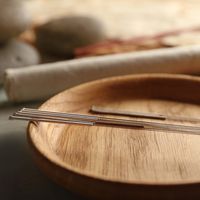
Acupuncture, called Ling Shu in Chinese, uses needles as the "keys to the axes."
Acupuncture needles are inserted at points to balance imbalances by regulating the meridians, or energy pathways, through connecting, filling, emptying, or separating them. Energy, or Qi, flows in the meridians. Qi nourishes and connects the organs, the physical Qi, and the emotions, the mental, and the subtle Qi into a cohesive system. The opposing forces that need to be balanced or harmonized are also known as Yin and Yang.
Shōnishin (Japanese: shōni – child; shin – needle/needling) is a form of acupuncture developed in Japan specifically for children, based on traditional Chinese medicine. Shōnishin is a non-invasive acupuncture method that uses a pen-like instrument instead of needles, thus avoiding skin penetration. The treatment is suitable for babies, toddlers, and preschool and school-aged children. Shōnishin is also very well-suited for sensitive adults and seniors, as it is a very gentle, needle-free therapy method.
Tui Na – Pushing and Pressing. The Chinese “Physiotherapy.”
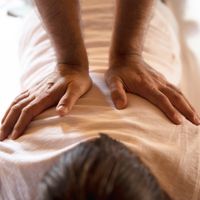
Tui Na is a traditional Chinese therapy, similar to a massage with a “physiotherapeutic” character. The work is done with the hands, specifically targeting muscles, tendons, and joints. By considering and aligning Qi, the emotional and mental bodies are holistically aligned, in addition to the physical body.
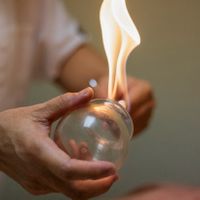
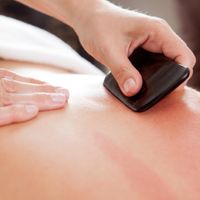
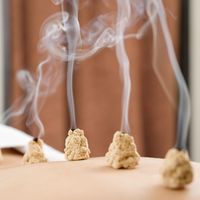
More than just needles: Gua Sha, Cupping, and Moxibustion in Traditional Chinese Medicine. Gua Sha involves scraping the skin with a rounded tool (usually made of jade, horn, or ceramic) in even strokes, with or without oil – typically in the area of the shoulders, back, neck, or arms. Red spots or streaks (known as "Sha") often appear during cupping, indicating that blood circulation has been strongly stimulated. Cupping has a similar effect – small glass cups are placed on the skin. Briefly warming the cups creates a vacuum, drawing the skin into them. The cups remain in place for a few minutes or are moved around ("gliding cupping"). Afterward, round red or purple marks often become visible. In addition to improving circulation, cupping also helps eliminate toxins and stimulates metabolism. Moxibustion (moxa) – burning dried mugwort (Artemisia vulgaris), usually on acupuncture points or specific areas of the body, creates a pleasant, deep warmth. Direct moxa is burned directly on the skin, for example, on a slice of ginger or a layer of salt. Indirect moxa methods include charred moxa sticks or boxes. The essential oils in moxa strengthen the body and its Qi (vital energy). The warmth moves the Yang to resolve stagnation and dispels cold/Yin.
Chinese Herbal Formulas: The Internal Medicine of Traditional Chinese Medicine.
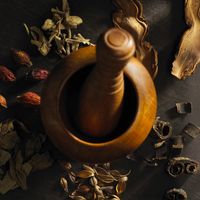
The history of Chinese internal medicine dates back over 2,000 years. Even in the oldest surviving Chinese pharmacopoeia, the Shang Han Lun (Treatise on Cold Injuries) from the 2nd century AD, fixed formulas were described. Over the centuries, physicians have developed and refined thousands of formulas and documented them in comprehensive compendiums. Each formula has a classic composition that is adapted to the individual situation as needed. The emotional and mental levels are addressed with the remedies just as much as the physical ones. Depending on the desired effect, the dosage form is prescribed as granules, hydrophilic tinctures, decoctions/teas, ointments, or syrups. The Chinese substances are tested in Switzerland by Swissmedic and are subject to the strictest quality controls. They are tested for pollutants, heavy metals, toxicity, and pesticides. Dispensing is handled through certified partner pharmacies.
Other methods offered in our practice:
Shiatsu is a complementary therapy from Japan that beautifully complements the methods of Traditional Chinese Medicine (TCM). Its focus is on the holistic healing of the individual. A therapy triggers lasting, health-promoting processes and unlocks the individual's potential resources, which can be integrated into daily life. Taking Qi into account, the body is mobilized, revitalized, or calmed through manual techniques. Shiatsu can help alleviate discomfort. It teaches people to be more mindful of their bodies. Makkoho stretching exercises are suitable for practicing Shiatsu at home.
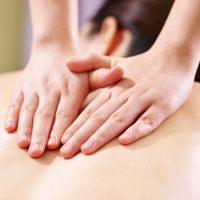
Massages – whether a classic full-body massage or a massage focusing on the neck and shoulders – affect the skin, connective tissue, and muscles. The effects of massage extend from the treated area to the entire body. Muscles and the nervous system relax, trigger points are released, and metabolism is stimulated to support the elimination of toxins and fluid retention in the tissues. Foot reflexology, developed from Far Eastern massage traditions, reflects the organs and muscle groups of our body on the feet and works via the meridians of Traditional Chinese Medicine. It is also well-suited during pregnancy from the fourth month onward. Massages restore the flow of energy, thus balancing disharmonies and restoring equilibrium. Body and mind relax, and metabolism is stimulated.
Hypnosis – Active hypnosis is a modern, clinically and therapeutically sound form of hypnotherapy. It was developed to specifically identify and sustainably transform deep-seated emotional patterns and unconscious blockages. The focus is on active inner change – going beyond mere relaxation. Hypnosis is particularly suitable for addressing anxieties, trauma, exhaustion, sleep disorders, psychosomatic complaints, and depressive states. It can also be used effectively to tackle personal or professional turning points.